Industrial hygiene, made more controlled.
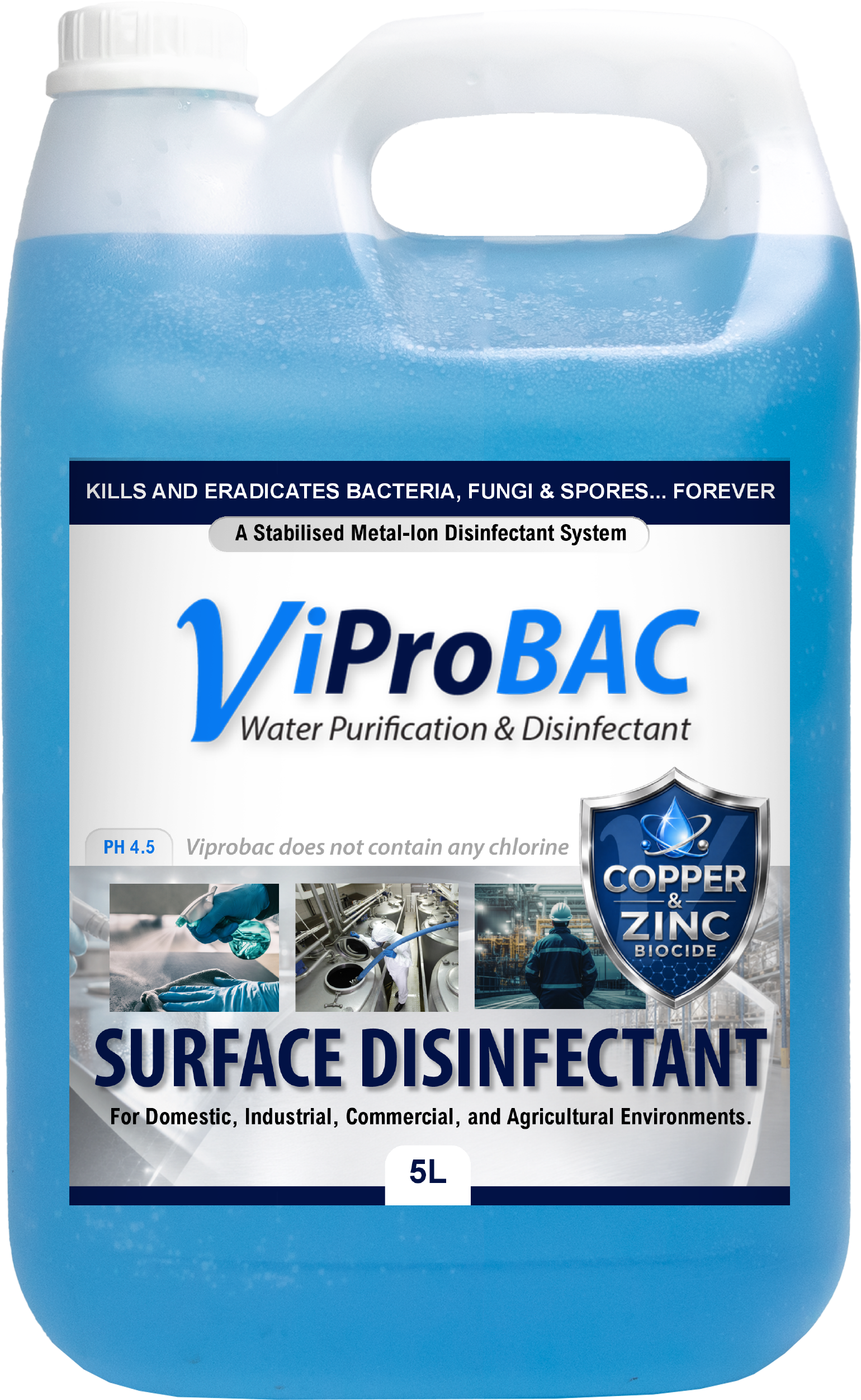
Bring Viprobac’s copper + zinc surface-disinfection system into factories, processing areas, warehouses, workshops and shared operational environments for practical treatment of frequently touched, hard, non-porous surfaces.
Designed for a more consistent industrial hygiene routine.
The surfaces an operation depends on every day.
Use only where permitted by the current product label or supplied instructions. Confirm material compatibility, electrical isolation and process requirements before treating a full area.
Production areas
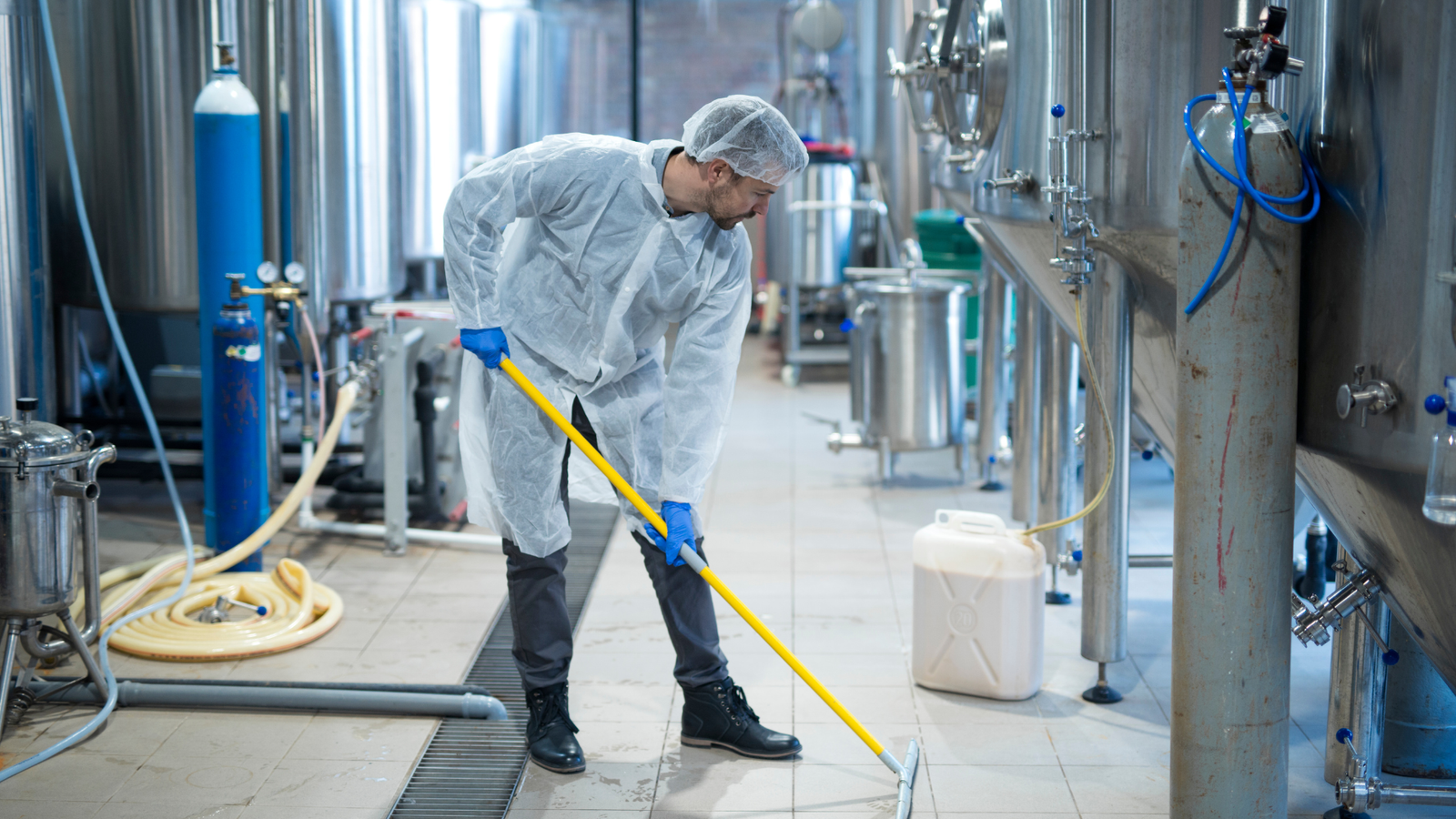
Selected hard surfaces around manufacturing lines, work cells and controlled production zones after visible soil has been removed.
- Workstations and barriers
- Handles, rails and access points
- Equipment exterior surfaces
Processing environments
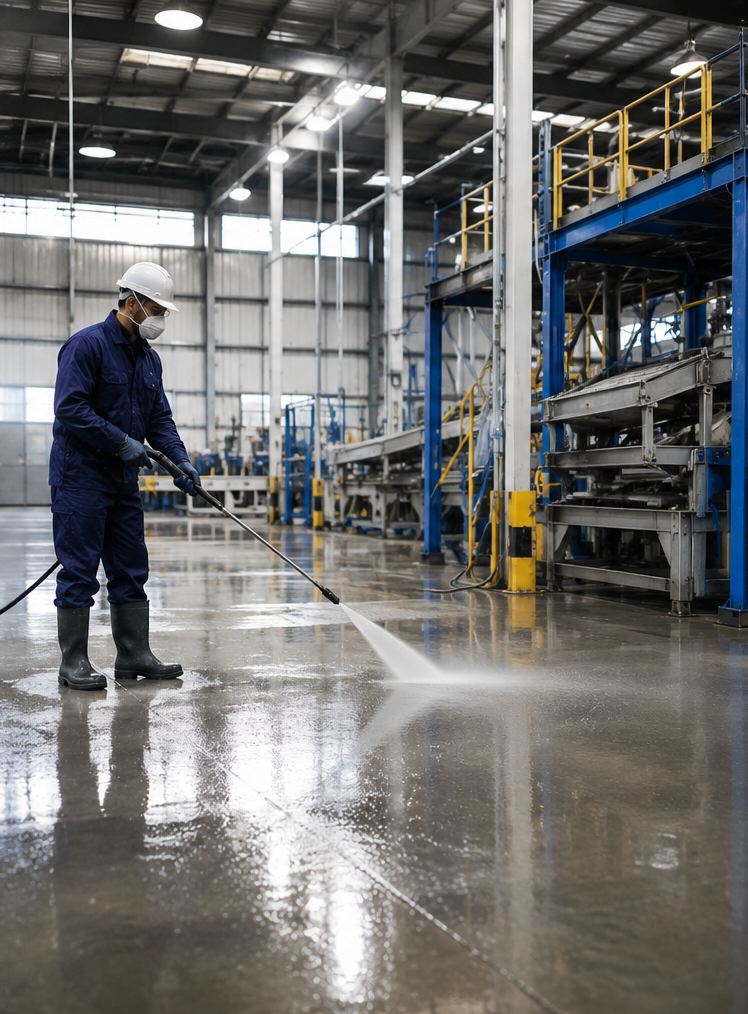
Designated non-product-contact surfaces in processing, packing and preparation areas, subject to the product’s current approved directions.
- Sealed benches and counters
- Machine guards and housings
- Doors, switches and controls
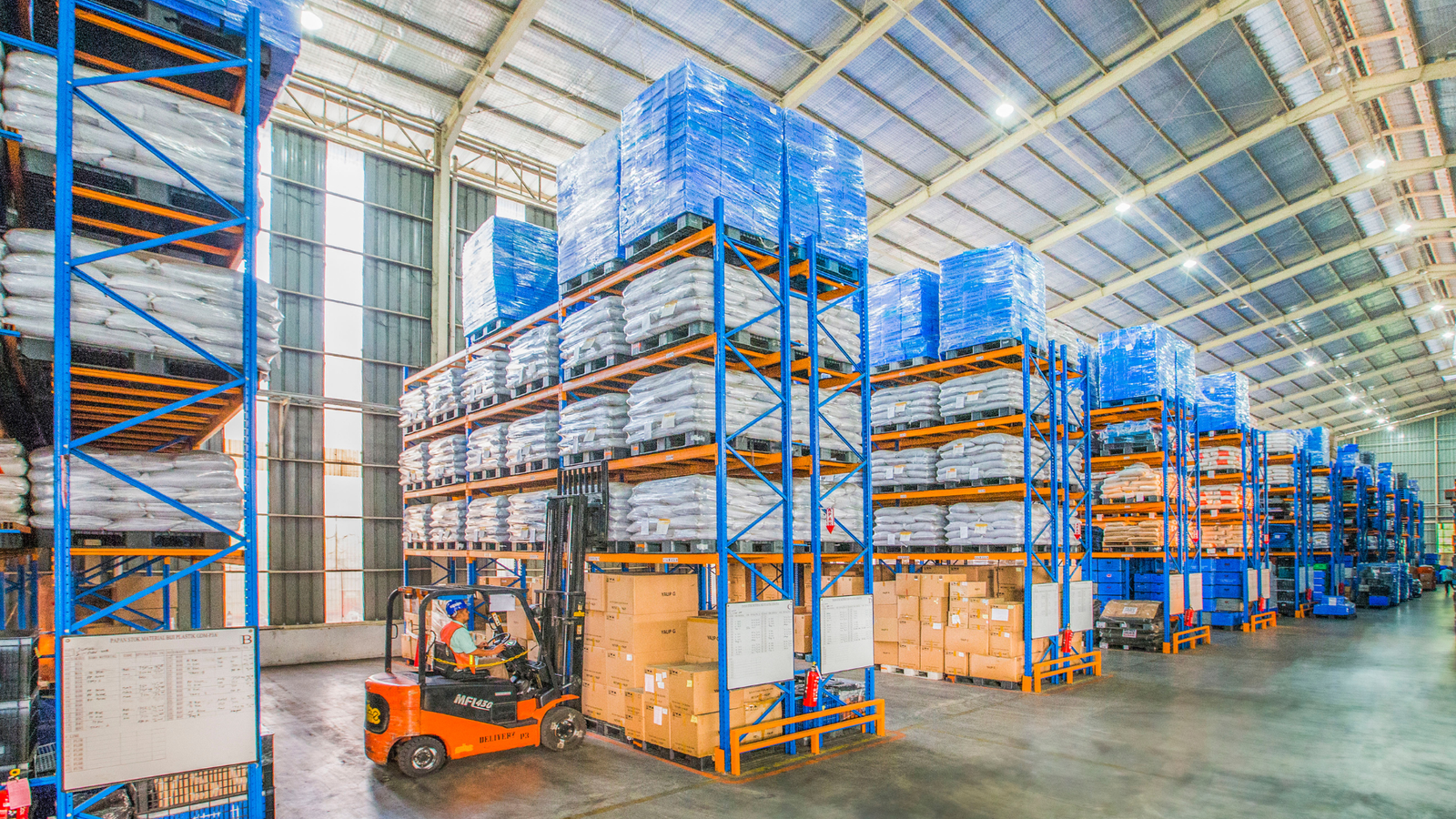
Warehousing and logistics
Frequently handled surfaces across receiving, storage, picking, dispatch and shared materials-handling environments.
- Trolleys and pallet jacks
- Dispatch counters and scanners
- Loading and access touchpoints

Workshops and shared facilities
Selected sealed surfaces in maintenance areas, staff facilities, control rooms and other shared operational spaces.
- Tool benches and cabinets
- Change-room touchpoints
- Shared office and control surfaces
Built around repeatable process, not guesswork.
Effective industrial disinfection depends on correct surface preparation, application strength, coverage and contact time. Viprobac’s industrial approach places a documented, repeatable protocol at the centre of the routine.
See the responsible-use methodCopper + zinc technology
A liquid formulation built around the antimicrobial properties of copper and zinc under controlled application conditions.
Made for operational routines
A 5 L format suited to facilities that need regular hard-surface care across multiple work zones and shared touchpoints.
Guidance before deployment
Use instructions should define dilution, contact time, rinsing, PPE, re-entry and surface compatibility—never estimate these from appearance alone.
A four-step industrial method.
Always let the current label, safety data sheet and Viprobac’s supplied application instructions take priority over general guidance.
Assess the zone
Identify the target surfaces, contamination risk, material compatibility, electrical components and operational restrictions before application.
Clean visible soil
Remove dirt, grease, process residue and organic matter first so the disinfectant can contact the intended hard surface directly.
Apply as directed
Prepare and apply only at the stated concentration. Achieve even coverage and keep the surface wet for the full specified contact time.
Complete and record
Allow drying or rinse where instructed, observe re-entry requirements and document the area, time, concentration and responsible operator.
Supported by copper + zinc biocidal research.
Controlled testing supplied by Viprobac reports antimicrobial activity for its copper/zinc technology under defined concentrations and contact periods. Industrial outcomes still depend on the correct product, surface, preparation, concentration, coverage and contact time.
Defined conditions matter. Laboratory results should not be separated from the concentration and contact period under which they were produced.
Site controls still apply. Existing hygiene plans, material limitations, process rules and regulatory requirements remain part of the final protocol.
Before you deploy it on site.
These answers are general safety guidance. The current product label, safety data sheet and supplied application instructions remain the authority.
Ask a product questionDo not assume. Use it only at the concentration or ready-to-use instruction stated on the current label or application guide supplied with the product.
Only on suitable, approved surfaces and under the facility’s isolation and safety procedures. Protect electrical parts, bearings, sensors, exposed product and any incompatible materials.
Only where the current product label expressly permits that use. Follow every pre-cleaning, contact-time and potable-water rinsing instruction before production resumes.
No. Never mix disinfectants, bleach, acids, detergents or industrial cleaning chemicals unless the official product directions specifically require and explain the combination.
The frequency should be set through the facility’s risk assessment, traffic levels, contamination exposure, production schedule and verified hygiene procedure rather than a universal timetable.
Build your site routine around the right guidance.
Speak to Viprobac about facility suitability, current directions and the correct surface-disinfection approach for your industrial environment.